Why a 15-Minute Stretch + 15-Minute Study Routine Works
You sit down at your desk to study or work, but your body feels stiff, your brain feels foggy, and somehow your hand is already reaching for your phone. You promise yourself that today you will focus, but ten minutes later you are scrolling instead of studying.
Research on study habits and self-regulated learning suggests that more study time does not automatically mean better results—what matters more is how intentionally you use your time and how consistent your routines are. Short, well-structured blocks are often easier to start and easier to repeat than vague plans like “I’ll study for four hours tonight.” That’s exactly why a simple 15-minute stretch and study routine can be so powerful.
At the same time, studies on physical activity and cognition show that even a brief bout of movement—around 10–15 minutes—can improve attention, perceived focus, and working memory right after a long sedentary period. That makes a simple 15-minute stretch + 15-minute study routine a practical way to wake up your body and brain before you ask yourself to concentrate.
I started using this kind of 30-minute warm-up block on days when my mind felt scattered, and it was just enough structure to actually finish one small but meaningful task instead of giving up for the whole evening.
Who This Routine Is For
This routine is designed for:
- Students preparing for exams who feel too tired or stiff to dive straight into focused work.
- Knowledge workers who juggle meetings, Slack messages, and deep work, and want a predictable way to shift into “focus mode.”
- Lifelong learners working on side projects, language study, or certifications after a full day at the office.
If you already use short focus blocks, you might also like our guide on 15-Minute Study Routine: How to Make Short, Focused Blocks Actually Work, which dives deeper into how to plan and chain these sessions together
Overview: The 30-Minute Warm-Up Block
In this article, you will build one simple 30-minute block that looks like this:
- 5 minutes – Preparation (clear your space, set your tools, pick one target)
- 15 minutes – Light stretching to wake up your body and brain
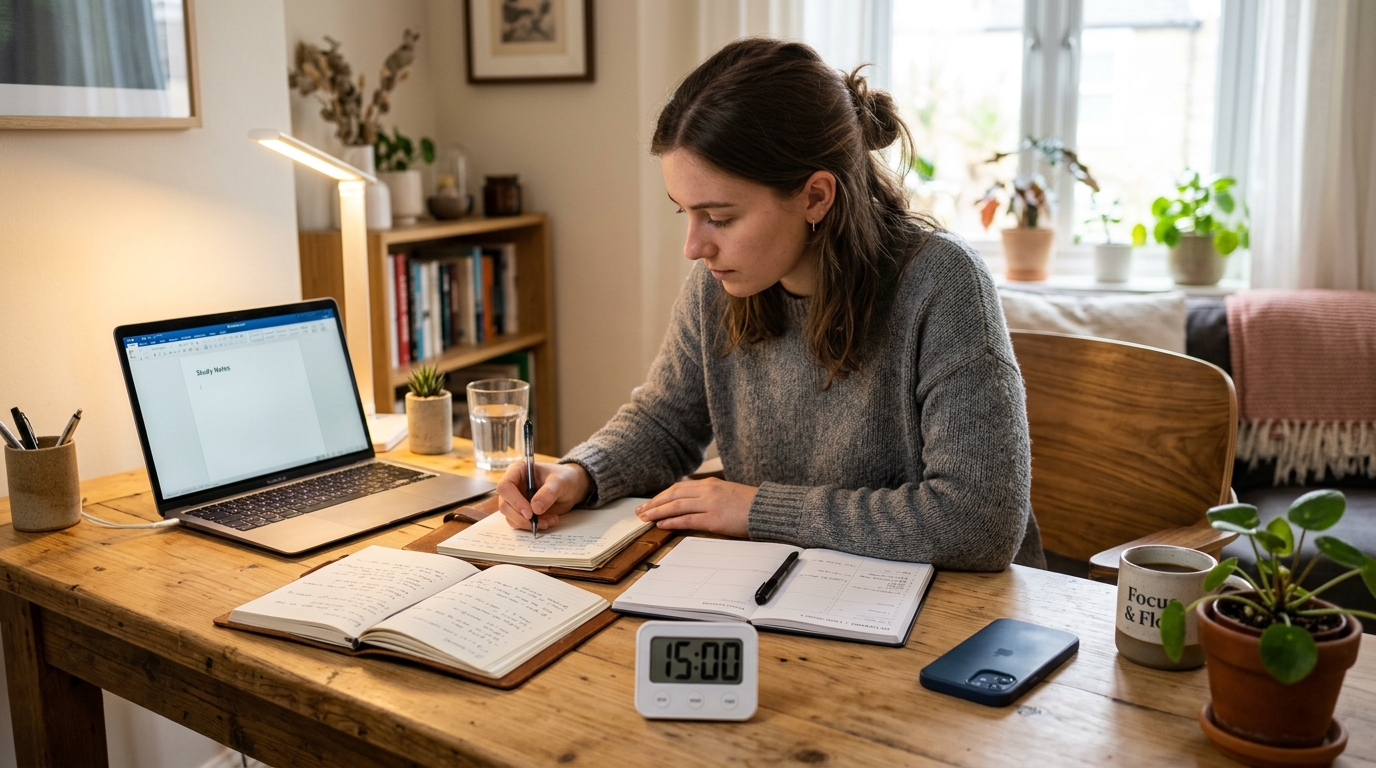
- 15 minutes – Focused study or work on exactly one task
You can start with just one block per day. If you have more energy or time, you can add a 5-minute break and repeat for a second block, but the default goal is “just one 30-minute set.”
Short, repeatable routines like this make it easier to show up consistently, which is strongly linked to better academic performance and more stable study habits over time.
Step 1 – 5-Minute Prep: Clear Your Space and Set Your Target
1. Clear Your Physical and Digital Space
Spend the first 2–3 minutes resetting your environment so it supports focus instead of fighting it.
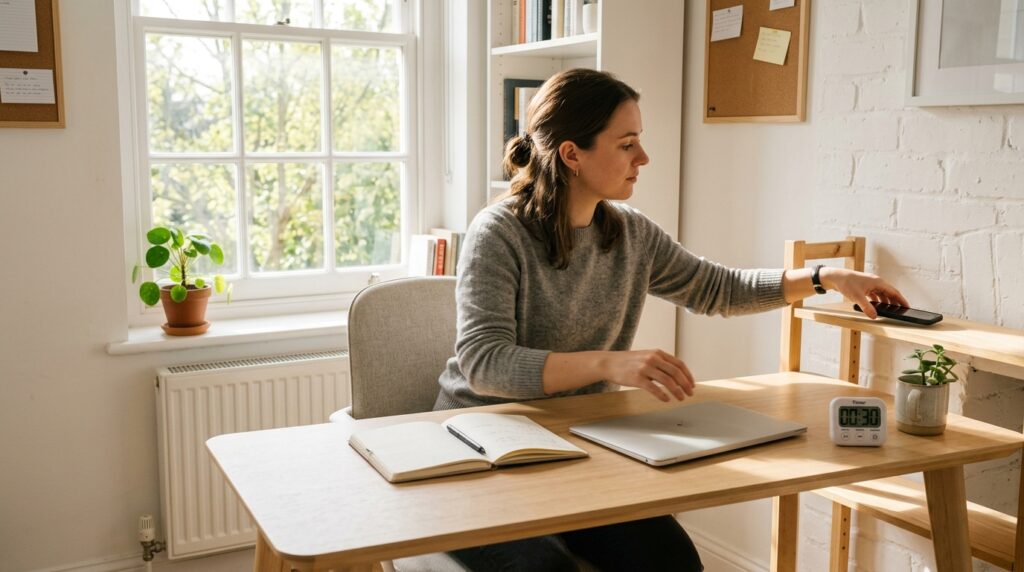
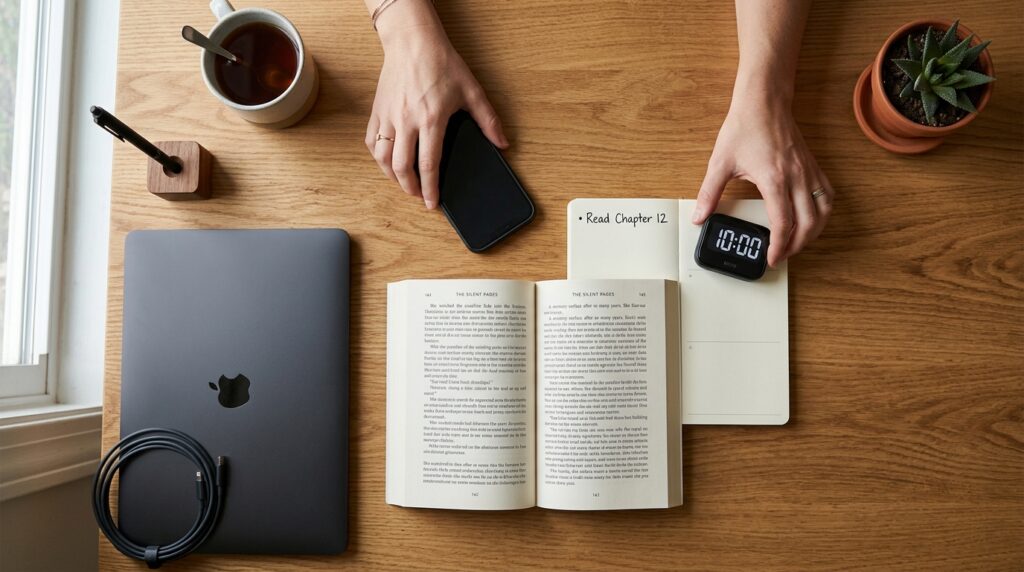
- Keep only what you need on your desk: your textbook or document, notebook, pen, and a glass of water.
- Move everything else—random papers, snacks, other devices—to one side or a drawer.
On the digital side:
- Close tabs that are not related to this 15-minute task.
- Mute notifications on your phone and computer for at least 30 minutes.
- If possible, put your phone in another room or at least out of sight.
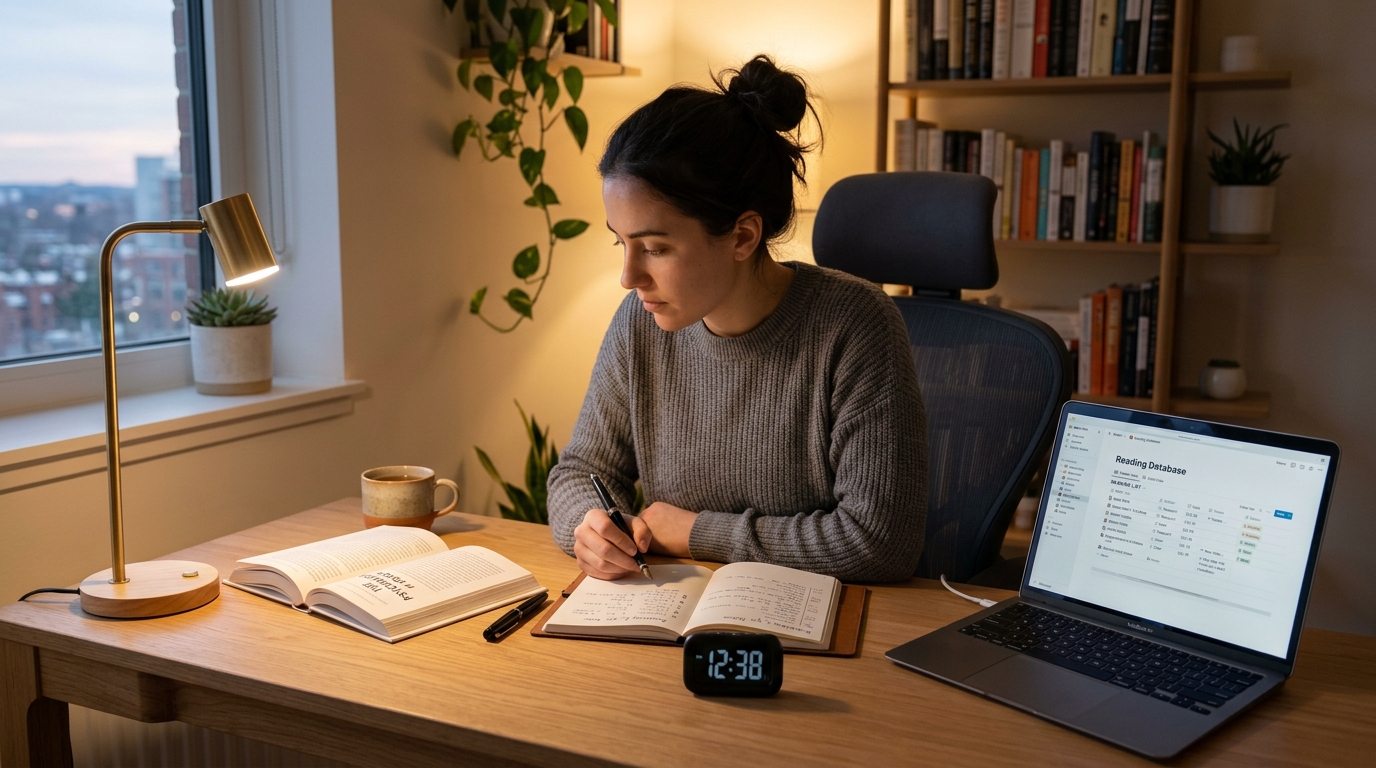
If you want a more structured digital setup, you can also check out our 15-Minute Reading and Notion Routine: How to Turn Scattered Book Notes into a Simple Reading System, which shows how to centralize your notes in one place.
2. Write One Specific Target for the 15-Minute Study Block
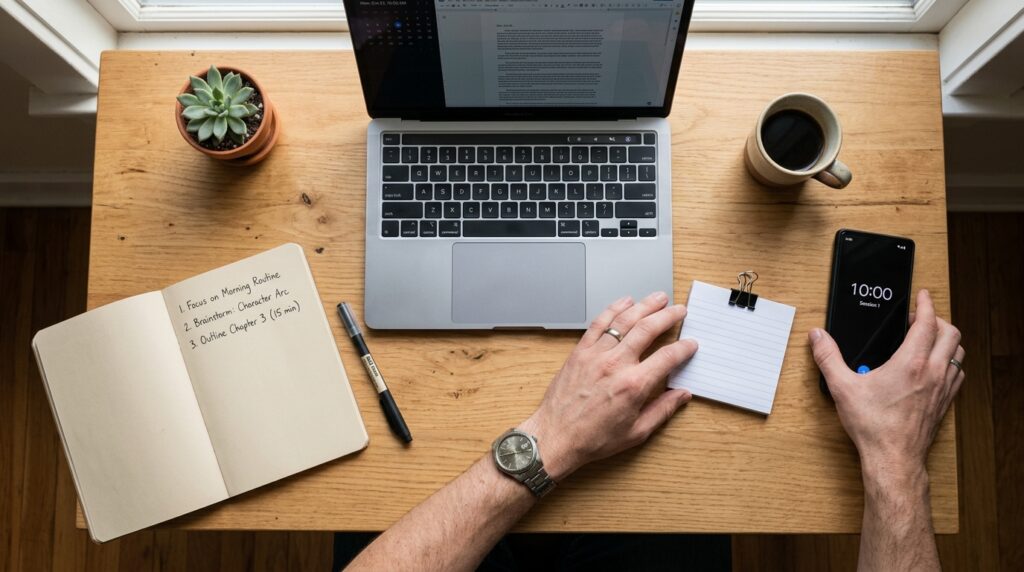
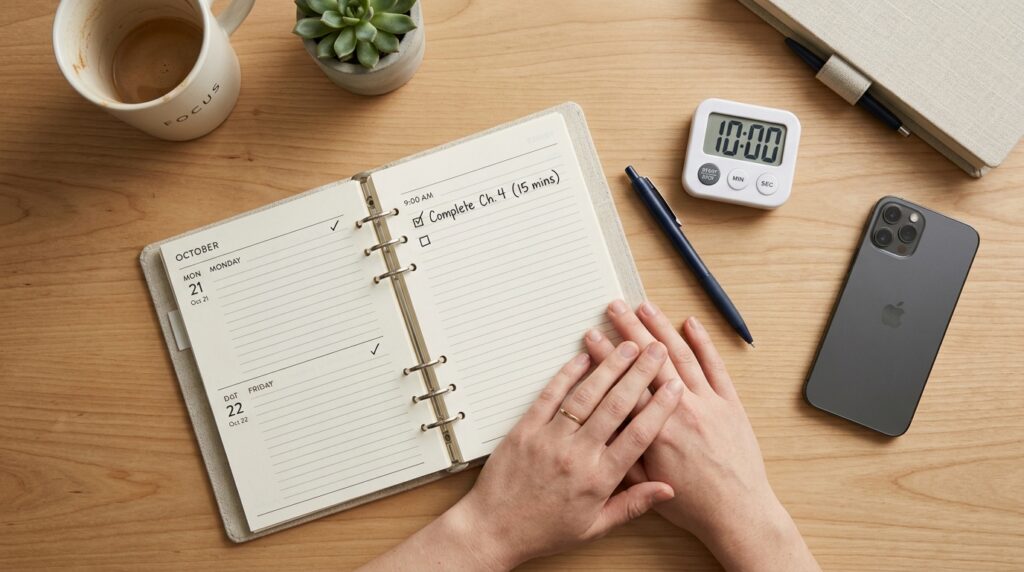
Take 1–2 minutes to decide exactly what this 15-minute study block is for. Write it down on paper or in a simple note app.
Examples:
- “Math workbook – solve pages 12–13.”
- “Memorize 20 English vocabulary words.”
- “Draft the first paragraph of my report.”
The more concrete and measurable the task, the easier it is to start and to know when you are done.
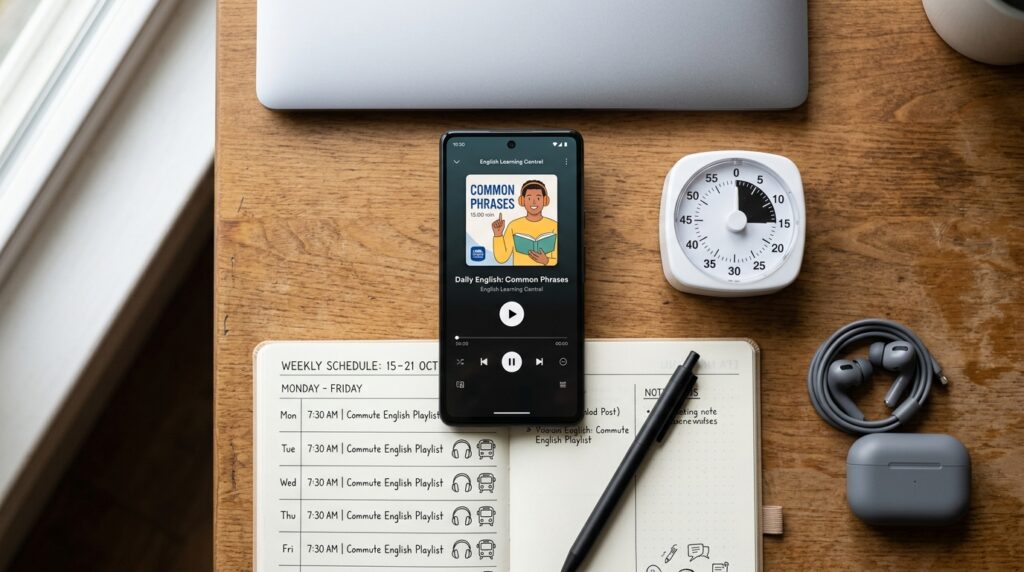
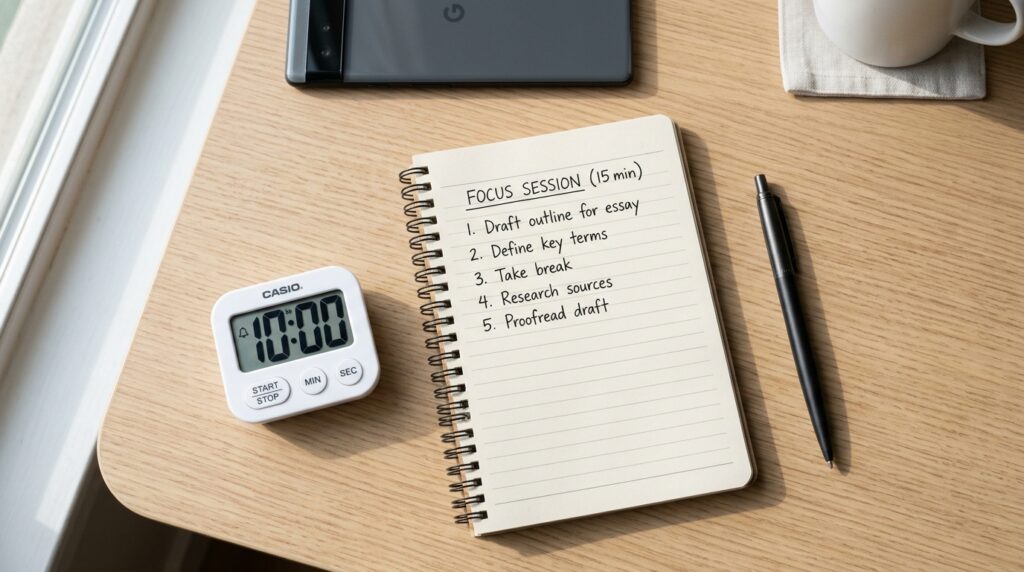
3. Set Two Timers in Advance
Before you start, set:
- One 15-minute timer for stretching.
- One 15-minute timer for focused study.
You can use any timer app or a physical timer. If you already have a “15-minute focus timer routine,” you can reuse the same tool here—see 15-Minute Focus Timer Routine: How to Stop Checking Your Phone While You Study for ideas on how to make that timer work for you, not against you.
The key is to remove any extra decisions once you begin. When one timer ends, you move straight into the next phase.
Step 2 – 15-Minute Stretch: Wake Up Your Body and Brain
Think of this as a warm-up for your brain, not a workout challenge. Research on short physical activity breaks shows that even a ten-minute bout of movement can restore attention and improve visual focus after sitting for long periods.
You can do this with zero equipment in a small space. Here is a simple template:

1. Neck and Shoulder Stretch – 5 Minutes
Focus on the areas that get tight when you sit:
- Gently roll your shoulders forward and backward.
- Slowly tilt your head side to side, then turn left and right, staying within a comfortable range.
- Interlace your fingers, stretch your arms forward, and feel the upper back open.
Move slowly, breathe steadily, and avoid any quick, jerky motions.
2. Back and Hip Stretch – 5 Minutes
You can do these standing or seated:
- Standing or seated cat–cow: gently round and arch your back.
- Seated twist: sit tall, rotate gently to each side while holding the back of your chair.
- Gentle forward fold: hinge at the hips and let your hands rest on your thighs or the desk.
Short, frequent movement breaks like this have been shown to support working memory and executive function, especially when used to interrupt long periods of sitting.
3. Legs and Lower Body Stretch – 5 Minutes
Finish by waking up your legs so they are not heavy during your study block:
- Seated hamstring stretch: extend one leg, flex your foot, and lean forward slightly.
- Ankle circles: lift one foot slightly and draw circles in both directions.
- Gentle hip openers: sitting upright, place one ankle over the opposite knee and lean forward a bit.
You do not need to hit every muscle perfectly—the goal is to feel more awake and less stuck in “chair mode.”
Step 3 – 15-Minute Study: Focus on Just One Thing
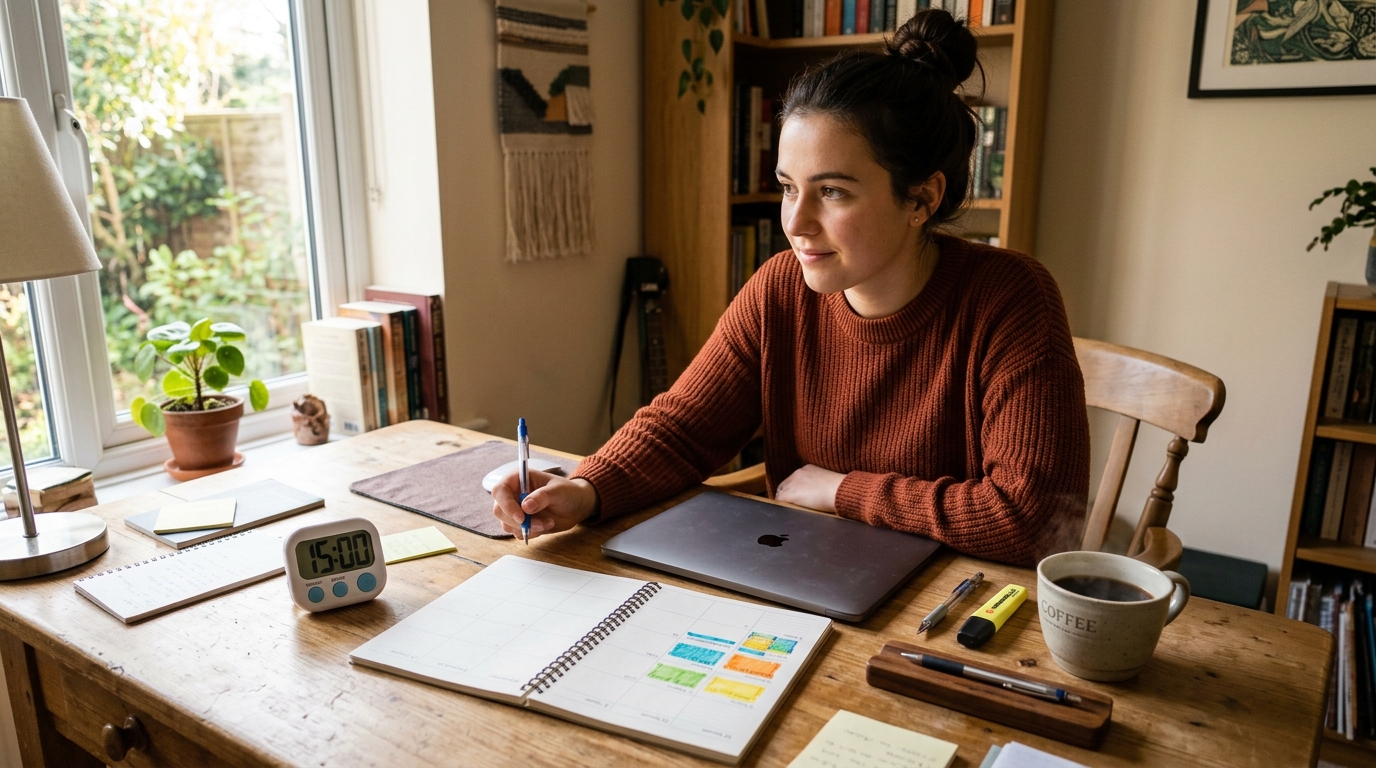
Now that your body is awake, sit back down and start your 15-minute focus timer. This block is only for the one task you wrote down earlier.
During these 15 minutes:
- Do not switch subjects. Stay with the one task.
- If you hit a difficult point, mark it and move on instead of stopping.
- Avoid checking your phone, messages, or email until the timer ends.
Short, focused blocks followed by brief breaks—similar to the principles behind the Pomodoro technique—are widely used to improve concentration and reduce burnout. Many learners find that 15 minutes feels “short enough to start” even on low-energy days, while still being long enough to make real progress on one small chunk of work.
If you want to understand how to build a full study day out of these blocks, see 15-Minute Study Blocks: How to Plan a Whole Exam Day in 15-Min Chunks for a deeper walkthrough.
Step 4 – 2–3-Minute Wrap-Up: Connect Today and Tomorrow
When the 15-minute study timer ends, resist the urge to stand up immediately. Spend just 2–3 more minutes wrapping up.
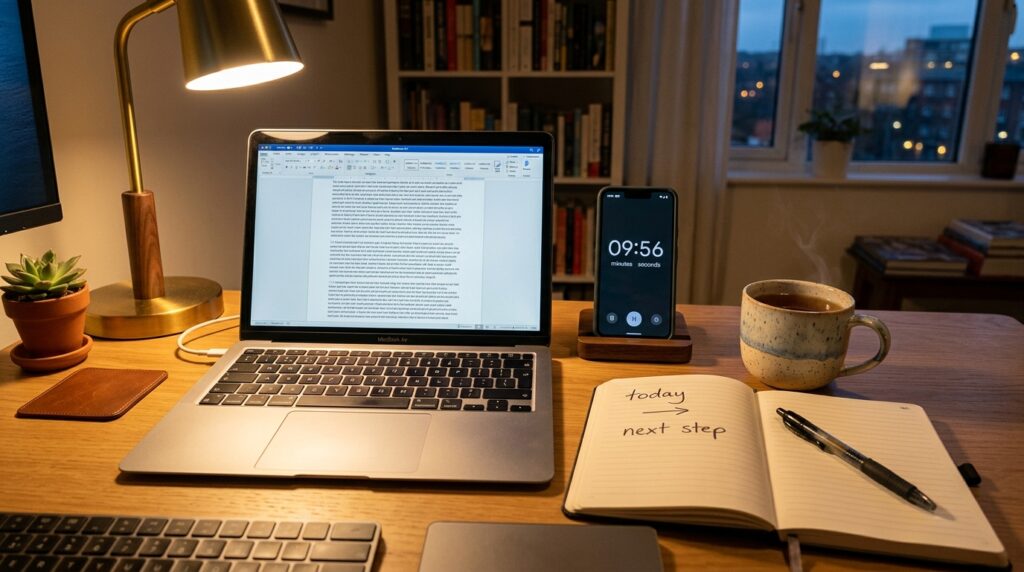
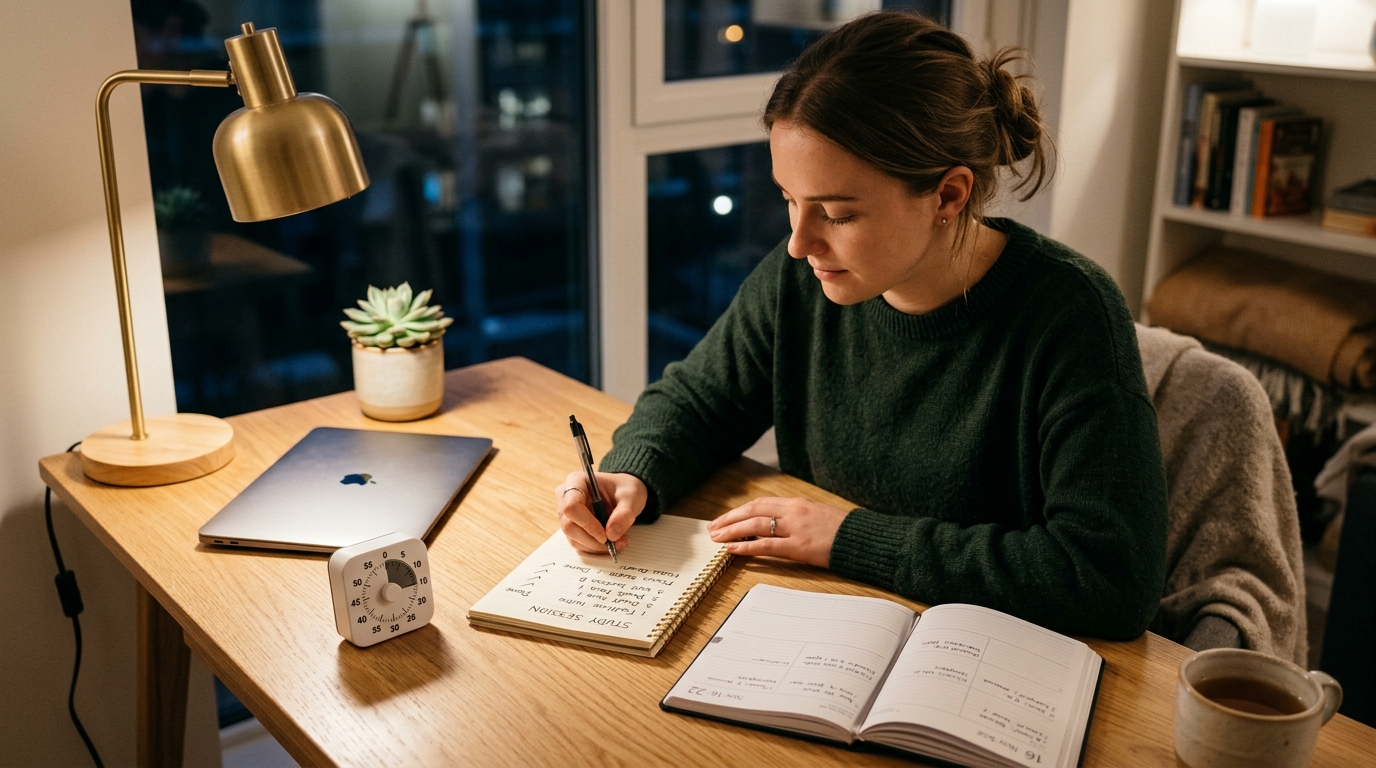
- In the corner of your notebook or in a notes app, write one quick line about what you did.
- “Today: Math pages 12–13, reviewed probability basics.”
- “Today: Memorized 20 vocabulary words, read them aloud three times.”
- Then write one line about what you will do next.
- “Next: Solve three more example problems.”
- “Next: Review today’s words once more.”
By previewing your next step, you make it much easier to restart your next session without wasting time thinking “Where should I start?”
You can track these mini-logs in a simple Notion database or any notes app; in our 15-Minute Reading and Notion Routine article, we show how to turn small notes like this into a long-term reading and learning archive.
Everyday Tips to Make This Routine Stick
Even the best routine only works if you repeat it. Here are a few ways to make this 30-minute block part of your real life, not just a nice idea.
1. Pick One Fixed Time Slot
Choose a consistent time of day for your “15-minute stretch + 15-minute study” block:
- 30 minutes before school or work.
- 30 minutes right after you get home.
- 30 minutes before bed.
Many habit and study guides emphasize that repeating the same routine at the same time each day helps your brain associate that time with “focus mode,” making it easier to start.
2. Set a “Minimum Version” for Hard Days
On really tough days, you might not feel up to the full 30 minutes. For those days, define a mini version in advance, such as:
- 5-minute stretch + 10-minute study.
The goal is to reduce “all or nothing” thinking. Being able to say “At least I did my mini version today” keeps your streak alive and maintains your identity as someone who shows up, even on low-energy days.
3. Use Simple Digital Tools, but Keep the Setup Light
You do not need a complex system to start. For most people, a minimal setup works best:
- Timer app – Any 15-minute timer, or your phone’s default timer, is enough.
- Notes app or Notion – One simple page or database where you log what you did and what you will do next.
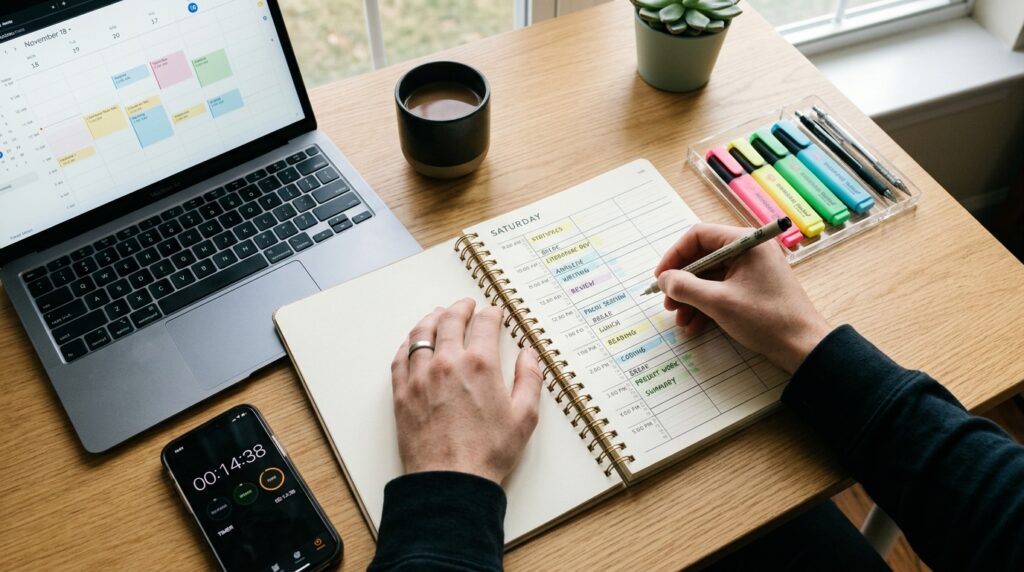
- Calendar or planner – Optional, for blocking your daily 30-minute slot.
Recent guides on using technology for learning emphasize that tools are most helpful when they reduce friction and support consistent routines rather than adding complexity. Start simple; you can always add more structure later if you need it.
Frequently Asked Questions
Q1. What if I only have 5 minutes, not 15?
A: On some days, your real constraint is energy or time. In that case, shrink the routine instead of skipping it entirely. For example, do 3 minutes of light stretching and 5 minutes of focused study on one tiny task; the habit of starting matters more than the perfect duration.
Q2. Can I use this routine for work tasks, not just studying?
A: Absolutely. This routine works well for any kind of knowledge work—writing reports, answering a batch of emails, planning a presentation, or reviewing documents. Just define one clear 15-minute task, set your timers, and treat it as a small warm-up block for deeper work.
Q3. Which tools do I need to start?
A: You only need three things: a timer, a place to write your 15-minute target, and a place to jot down what you did. That can be as simple as your phone’s timer and a paper notebook, or as digital as a Notion database plus a focus timer app—choose whatever you are most likely to use consistently.
Q4. How often should I do this 15 + 15 block?
A: Aim for once per day to start, especially on days when you feel unfocused or tired. As the routine becomes easier, you can add a second block after a short break on weekends or lighter days, but keep your baseline goal realistic and sustainable.
Related Routines You Might Like
- If you already use short focus blocks, you might also like our 15-Minute Study Routine: How to Make Short, Focused Blocks Actually Work, which shows you how to chain multiple 15-minute sessions into real progress.
- For days when you want to organize an entire exam schedule around short sessions, check out 15-Minute Study Blocks: How to Plan a Whole Exam Day in 15-Min Chunks.
- If you want a simple way to manage all your notes and reading in one place, our 15-Minute Reading and Notion Routine walks through a realistic Notion setup for busy students and professionals.
- To stop checking your phone during these 15-minute sessions, see 15-Minute Focus Timer Routine: How to Stop Checking Your Phone While You Study for practical timer setups and app recommendations.
- If you study after work and feel exhausted, our 15-Minute Evening Study Routine for Busy Office Workers pairs well with this stretch + study block as an evening warm-up.
Learn More
For more on focus, study habits, and using movement and digital tools to support your routines, these resources are a helpful next step:
- Frontiers in Psychology – Acute Effects of a Short Bout of Physical Activity on Cognitive Function
A study showing that a single ten-minute bout of physical activity can improve visual attention and perceived focus after a sedentary period.
https://pubmed.ncbi.nlm.nih.gov/32456170/ - Frontiers in Human Neuroscience – Short, Frequent Physical Activity Breaks Improve Working Memory
Reviews how brief movement breaks during sedentary tasks can support working memory and executive function.
https://pmc.ncbi.nlm.nih.gov/articles/PMC11295579/ - Global Banking School – Using Technology to Enhance Your Learning and Study Routine
Practical tips on using digital tools like apps and online platforms to build more effective and enjoyable study routines.
https://globalbanking.ac.uk/blog/using-technology-to-enhance-your-learning-and-study-routine/ - Bay Atlantic University – Innovative Study Habits for the Digital Age: Leveraging AI Tools for Education
Explores how AI tools can help students create smarter study routines, manage tasks, and stay consistent over time.
https://bau.edu/blog/leveraging-ai-tools-for-education/